Showing posts with label sugar. Show all posts

Tuesday, August 27, 2013

Sweetness

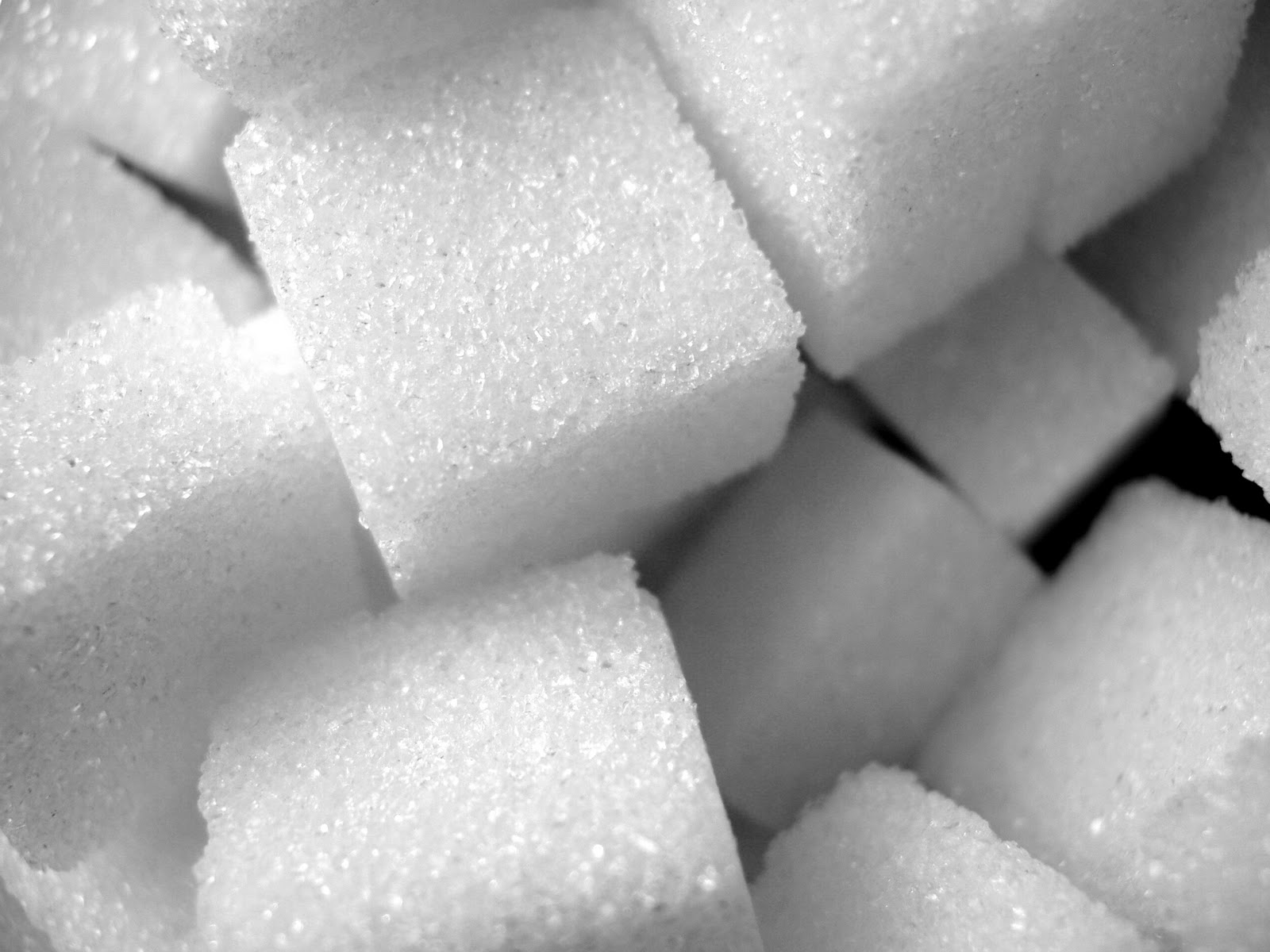
The sugar and sweetener debate has been going on for a long time.  With Coca Cola defending aspartame in its new ad campaign, people are once again questioning the safety of such ingredients.

I agree with dietitian Andy Bellatti (quoted below by cbc) that junk food (or highly processed food) made with natural sugar or artificial sweeteners is still junk food. 
"Even if (aspartame is) 100 per cent safe to use, it's still problematic from a nutrition standpoint," said Andy Bellatti, a registered dietitian based in Las Vegas who is critical of the food industry's marketing practices.  Bellatti noted that foods and drinks aren't good for people just because they don't have any calories or have been shown to be safe. He added that ingredients such as aspartame only keep people hooked on sweets over more wholesome choices (cbc).
It may be the other choices that people make along with their diet soda (sedentary lifestyle, high calorie foods with high levels of trans fat and/or saturated fat, and a lack of vitamins and minerals), the sugar craving that is just not satisfied with an artificial (or non-nutritive) sweetener or an over-consumption of an item which they have deemed 'healthy' because of the lack (or low) calorie level.  There are many factors to consider.

Health Canada must approve all the artificial sweeteners that are sold in Canada. A sweetener has to undergo extensive research to show its safety and effectiveness before Health Canada will approve it for use. Once a sweetener is approved, Health Canada sets strict guidelines for how it can be used, as well as advice on Acceptable Daily Intake (ADI) levels.  Keep in mind that just because it is considered safe, doesn't mean that it's healthy.

Many people are consuming more sugar and/or sweeteners/substitutes than they may realize.  The American Heart Association recommends that women keep added sugar to less than 6 tsp per day and men to less than 9 tsp per day.  Whatever sugar or substitute you are choosing, moderation is key.  A natural, organic, raw sugar or syrup is still contributing calories with little or no nutritional value (all sugars have similar calories).  The Mayo Clinic is also in agreement with the idea of moderation:
When choosing sugar substitutes, it pays to be a savvy consumer. Get informed and look beyond the hype. While artificial sweeteners and sugar substitutes may help with weight management, they aren't a magic bullet and should be used only in moderation. Just because a food is marketed as sugar-free doesn't mean it's free of calories. If you eat too many sugar-free foods, you can still gain weight if they have other ingredients that contain calories. And remember that processed foods, which often contain sugar substitutes, generally don't offer the same health benefits as do whole foods, such as fruits and vegetables.
Sugar naturally occurs in fruit, vegetables, and milk products.  Choose those wholesome foods to also get the benefit of antioxidants, fibre, vitamins, and minerals, rather than replacing them with artificially sweetened or naturally sweetened items.  Be a smart shopper and familiarize yourself with the ingredient list.  Sugars and sweeteners may appear as: honey, maple syrup, white sugar, brown sugar, icing sugar, molasses, corn syrup, brown rice syrup, sucralose, splenda, aspartame, acesulfame potassium, sugar alcohols (xylitol, sorbitol, mannitol, malitol), cane juice, high fructose corn syrup, fruit juice concentrate, and various "-ose" sugars (dextrose, sucrose, lactose, fructose, maltose, glucose).

You can find science based pros and cons (an un-researched proclamations), but you need to decide what's right for you.  Artificial sweeteners may help people with diabetes to manage their blood sugar levels or may be sweet enough that you find you're using less.  Sugar alcohols don't contribute to tooth decay and cavities and you may feel 'healthier' switching from sugar to agave, but your best bet is to kick the pop/sweet habit in the first place and start enjoying more nutritious options.  In my perfect world we would have less sugar added to our food so that we could re-train our preferences and remember/enjoy the real taste of food.

Here's to eating food!
Steph Langdon, RD
something nutrishus counselling & coaching
www.nutrishus.com

Monday, August 19, 2013

A World of Flavours

One reason I love traveling is because you get to experience different cultures and their foods.  There may be similar ingredients, but perhaps they are used in different ways.  When I talk about mindful eating, that involves enjoying the many flavours of your food.  Whether you're cooking the food yourself or lucky enough to just get to eat it (I love cooking, don't get me wrong!), it's important to stop and savour the tastes - the sweetness of cinnamon, the 'meatiness' of cumin, the memories I have that I associate with mint.  We will all have preferences and familiar flavours, but I do enjoy cooking with different ingredients and spices and seeing/experiencing how other people flavour their food.

The smells are also very important when we think of taste and flavour.  My mom used to say to start sauteing onions and garlic to at least give the impression that the meal is on the way (even if you still have lots of prepping, you'll also have drooling guests).  I think I still need to work on my detection of different spices, but that just means I can continue to slow down and discuss my food with others and pick out the different flavours.  At my wedding shower, we played a 'guess the spice' game, which was a perfect game for a foodie bride, but the blends got me and I definitely wasn't the winner!

Many cities celebrate culture with a type of folk festival.  We just had ours in Saskatoon and I sampled great food and spent time with family and friends.  As we were leaving, my husband and I noticed some informational signs in the Caribbean pavilion, so I made sure to capture them to share with you.


They give some background on flavours used in Caribbean food and connections to Indian food (curry).  This reminded me of our cooking class in Thailand and how we noticed just a slight change in the ingredients meant a huge difference in the curry paste.

If you're like many people, you might have a cupboard full of spices, but you have your favourites (or the ones that you're comfortable using) and then you have ones that were in a rare recipe or that you don't know what to do with.  Spices can be a great ingredient to share with others since they may come in much larger portions than you need.  You can also start looking for new ways to spice up or flavour your meals.  Herbs and spices can be a great way to reduce salt, fat, and sugar in our diets, but still leave us feeling satisfied.

Dietitians of Canada has created a chart with suggested flavour enhancers to inspire your cooking efforts.  And if you're not sure what to do with that marjoram or cardamom, EatRight Ontario has brief descriptions and recipes for a variety of herbs and spices.  This may give you ideas for fresh herbs from your garden or local farmer's market as well.  There are also lots of infographics out there to help you create spice blends or determine which spices go best with which ingredients.

Here's to delicious food!
Steph Langdon, RD
something nutrishus counselling & coaching
www.nutrishus.com

Tuesday, May 29, 2012

Q's Day: Summer Drinks

I had a few new items in my sugar display at the SK Marathon Expo over the weekend.  I find that people are often surprised when they learn how much sugar is lurking in their favourite drinks! 

As we head into summer people turn to cold beverages as a way to cool off and rehydrate.  While that is a great idea (because so many people are living life dehydrated!), you still want to choose wisely.  Watch out for excess sugar and fat that may be hiding in there. 

Most companies have their nutrition information available in store or on-line (or both), so you can always check it out and see if there is a 'better' option for your next visit.  Remember that size matters too, so practice portion control and enjoy some refreshing water or even home brewed iced tea (water and tea bag/leaves).  If you're not a coffee or tea drinker, be careful with the slushes or slurpees!

My Q's Day question today is:

What is your favourite summer drink?

For educational purposes, I have included a few Starbucks and Tim Horton's beverages in today's post:


Starbucks
Shaken Iced Tea (with Classic Syrup)
Venti: 120 Calories, 31g sugar (~8 tsp), caffeine varies
Grande: 80 Calories, 21g sugar (~5 tsp), caffeine varies

Shaken Iced Tea Lemonade (with Classic Syrup)
            Venti: 190 Calories, 49g sugar (~12 tsp), caffeine varies
            Grande: 130 Calories, 33g sugar (~8 tsp), caffeine varies

Mocha or Caramel Frappuccino (no whipped cream)
            Venti: 350 Calories, 76g sugar (19 tsp), 140mg caffeine
Grande: 260 Calories, 58g sugar (~14 tsp), 110mg caffeine

Light Mocha or Caramel Frappuccino (no whipped cream)
            Venti: 210 Calories, 42g sugar (~10 tsp), 120mg caffeine
Grande: 150 Calories, 30g sugar (~7 tsp), 90mg caffeine

Vanilla Bean Frappuccino (no whipped cream)
            Venti: 330 Calories, 71g sugar (~ 18 tsp), 0 caffeine
Grande: 250 Calories, 55g sugar(~ 14 tsp), 0 caffeine

Cappuccino
            Venti: 120 Calories, 14g sugar (~4 tsp), 150mg caffeine
            Grande: 100 Calories, 10g sugar (~3 tsp), 150mg caffeine

Caramel Macchiato
Venti: 250 Calories, 40g sugar (10 tsp), 150mg caffeine
            Grande: 200 Calories, 32g sugar (8 tsp), 150mg caffeine

Flavoured Latte:
Venti: 300 Calories, 44g sugar (11 tsp), 150mg caffeine
            Grande: 220 Calories, 35g sugar (~9 tsp), 150mg caffeine

Brewed Coffee
            Venti: 410 mg caffeine
            Grande: 330mg caffeine

 
Tim Horton’s

Strawberry Banana Fruit Smoothie (with yogurt)
            Large: 290 Calories, 60g sugar (15 tsp)

Mixed Berry Smoothie (without yogurt)
            Large: 240 Calories, 56g sugar (14 tsp)

Mocha Iced Coffee (milk)
            Large: 240 Calories, 31g sugar (~8 tsp)  

Iced Coffee (milk and beverage base)
            Large: 170 Calories, 20g sugar (5 tsp)

Flavoured Iced Latte Supreme
            Large: 250 Calories, 30g sugar (~8 tsp)
            Medium: 210 Calories, 25g sugar (~6 tsp)
Latte
            Medium: 110 Calories, 16g sugar (4 tsp)

Cappucino
            Medium: 100 Calories, 15g sugar (~4 tsp)

Mocha Latte
            Medium: 230 Calories, 30g sugar (~8 tsp)

Iced Cappuccino
            Medium: Milk: 220 Calories, 40g sugar (10 tsp)
            Medium: Chocolate Milk: 230 Calories, 52g sugar (13 tsp)
            Medium: Cream: 360 Calories, 47g sugar (~12 tsp)

Iced Cappuccino Supreme
            Small: Hazelnut (milk): 240 Calories, 39g sugar (~10 tsp)
            Small: Butter Caramel (milk): 230 Calories, 39g sugar (~10 tsp)
            Small: Chocolate Mint (milk): 220 Calories, 39g sugar (~10 tsp)

Happy hydrating!
Steph Langdon (Wheler), RD
something nutrishus counselling & coaching

Thursday, January 19, 2012

Recipe Makeover – Get Less Sugar and More Fibre


Learning to reduce, eliminate, and substitute certain ingredients can help you make healthier alternatives in the kitchen.  Most people are trying to reduce sugar, fat, salt, and calories.  A healthy change can also be to increase fibre since most of us don’t get enough from our food choices.  These ‘makeovers’ can help control blood pressure, blood sugar, cholesterol, and weight. 

It may be easiest for you to start experimenting with your tried, tested, usual dishes, or you may find it easiest to start with a brand new recipe.  Since I talked about sugar on Monday's segment, I'll continue to focus on reducing sugar, but also discuss increasing fibre.  

When you’re looking for the sugar in a recipe, don’t forget to include white sugar, brown sugar, icing sugar, corn syrup or other syrups, honey, and even molasses.  These forms of sugar all provide sweetness and calories, but are low in nutrients. 

To adapt the sugar in your recipe(s) you can try:
-         Using less - reduce the sugar by 1/4 to 1/3
-         Using extracts for sweetness (vanilla, maple, almond, etc.)
-         Using spices for sweetness (cinnamon, nutmeg, ginger, etc.)
-         Reducing the amount of chocolate chips by half and chopping before using

Fibre is beneficial for controlling blood sugar levels, helping you feel full, intestinal health, and it may help prevent heart disease.  To adapt your recipe(s) to increase fibre you can try:
-         Replacing up to half the white flour with whole wheat flour (or perhaps all with experimenting)
-         Replacing up to a quarter of the flour with ground flaxseed
-         Keeping the peel on chopped fruit
-         Using brown or wild rice instead of white rice
-         Adding bran cereal or oat bran to muffins, cereals, or cookies

Remember that some recipes may take more experimenting than others, so it may help to keep track of the adaptations you make.  Try it for yourself to find out what healthy creations you can make.

Happy creating!
Stephanie Wheler, RD
Something Nutrishus Counselling & Coaching

www.nutrishus.com

Source:
Dietitians of Canada. Recipe “Make-over”: How to make your recipes healthier. 2009

Friday, February 25, 2011

An Environment to Support Healthy Eating

I recently listened to a podcast from the 2010 Dietitians of Canada Conference. The presentation was called "Changing Food Landscapes" and a Quebec RD, Martine Pageau, was the presenter. Listening to her made me feel that I am becoming more aware of how our environment is working against us. It is no excuse, but how often do people try hard to eat healthy, yet the only option at the rink, at the workplace cafeteria, at the convenience store, etc. is something processed, high in fat, high in salt, high in sugar, or all of the above?!

If the environment doesn't support the changes that people are trying to make, then the people are more likely to give up and/or give in. We seem to feel that our lives are too busy these days, which leaves little time to think about what to eat. If it is difficult to find healthy choices, or if healthy choices are far more expensive, then most people will not choose them.

I remember that having pop or chips was a treat as a child, yet now we see them as regular items in people's meals/snacks. They seem to be available everywhere! People don't have to eat "perfectly" healthy, but the proportion of healthy food should far outweigh the proportion of so called "junk" food (foods of little or no nutritional value).

As a dietitian I work to help people make healthier choices in their lives, but we need to speak up as a society in order for those healthy choices to be the simple, easily accessible choices.

Steph Wheler
www.nutrishus.com

Thursday, September 3, 2009

Bean Salad


1/2 cup sugar (or splenda)
3/4 cup cider vinegar
1/2 cup vegetable oil
1 tsp dill
Combine these ingredients and bring just to a boil to dissolve sugar.
Pour over combination of beans.
I usually add:
1 can each of green beans, chick peas, kidney beans, black beans.
You can also add finely chopped onion, celery, red pepper...
Let it marinate overnight before serving. Keeps for several days.

So yummy, and I always get compliments and people asking for the recipe. It's great for potlucks and family gatherings!

Steph Wheler
www.nutrishus.com

Monday, April 27, 2009

Sugar, Sugar, Sugar

I've been trying to understand why we love sugar so much. I definitely crave it some days and I know others do too. Some people tend to crave salty things, but a sweet tooth is quite common. I think a good way to deal with it is to make sure you eat often throughout the day so that your blood sugar doesn't get too low; that's often when you feel like a quick sugar fix. Having healthy snack ready to go is also a good idea. It can help to focus on portion control too. If you're going to have something with lots of sugar, just don't overdo it. Have a Halloween size chocolate bar in stead of a regular one, have one scoop of ice cream instead of two, you get the idea. I know I can't completely eliminate sweets because that's when I'll think about them even more. So learn to control the cravings. It's also important to look at how you are feeling emotionally. Some people eat when they're bored, sad, lonely, and so on. If that is the case, try to find other solutions than looking for cookies or a chocolate bar. You also need to be creative in how you reward yourself, get a new lipstick, a new shirt, etc. instead of overdoing it with sweets.

Steph Wheler
www.nutrishus.com